Videoinu AI Video Generator Free — No Login
Turn one narrative beat into a Videoinu AI video draft on King AI.
Stage One Story Beat With Clear Continuity
Define intention, obstacle, change, and the visual bridge into the next shot.

Define What Changes During the Shot
Videoinu AI story planning gives the subject an intention, a visible action, and a changed state by the end. Keep the beat small enough that Videoinu AI can express it without compressing several scenes together.
- Name the intention
- Show one turning action
- End on a changed state

Place the Subject and Camera for Readable Action
Videoinu AI direction maps entrances, exits, eyelines, and the camera position before atmospheric detail. Clear Videoinu AI blocking helps viewers understand who acts and where attention should move.
- Mark the starting position
- Protect the eyeline
- Choose one camera move

Review the Cut Points Before Building a Sequence
Videoinu AI drafts need a stable opening image, consistent screen direction, and an ending frame that can connect elsewhere. Judge those boundaries before carrying the Videoinu AI shot into a longer edit.
- Inspect entry and exit frames
- Check screen direction
- Save the continuity note
Videoinu AI Planning for a Single Coherent Story Beat
King AI renders the shot for Videoinu AI while screenplay discipline keeps action and continuity understandable.
Beat-Level Story Logic
A prompt built around intention, obstacle, action, and reaction inside one short event tends to outperform an attempt to summarize an entire plot. A single visible change gives an editor stronger material for later assembly than a compressed, hurried sequence of several scenes.
Blocking and Eyeline Awareness
Subjects, movement paths, and camera position get placed before atmosphere ever enters the brief. Watching screen direction and spatial relationships during review is what lets a Videoinu AI shot connect cleanly with whatever comes before or after it in an edit.
Editorial Entry and Exit Frames
Results get assessed at their opening and closing boundaries just as carefully as the middle action. A useful handoff note for a Videoinu AI shot describes what could precede it, what may follow it, and which continuity risks still remain unresolved.
Stage a Videoinu AI Story Beat in Three Acts
A Videoinu AI shot moves from beat sheet to blocking plan to continuity review, in that order.
Write the Beat Sheet
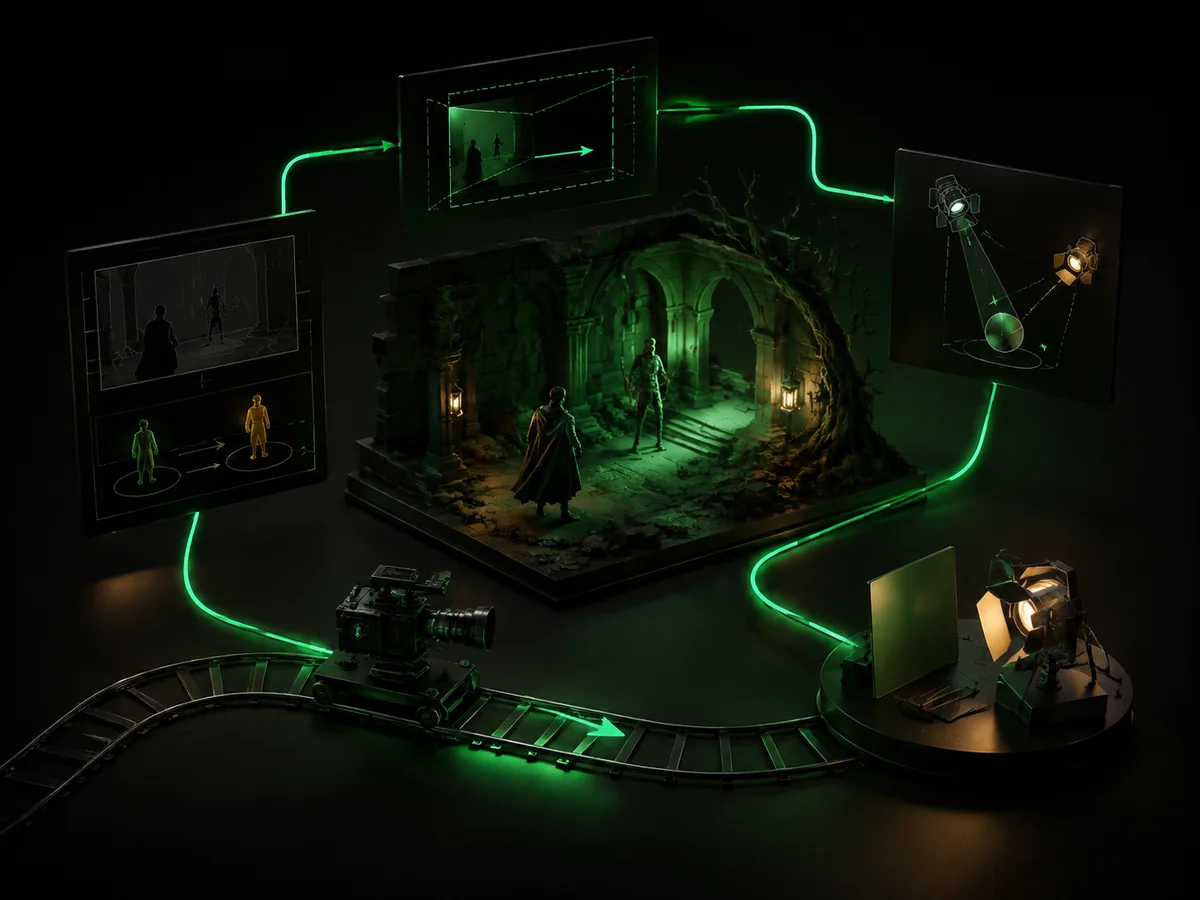
Describe who wants what, which obstacle appears, what visible action occurs, and how the situation changes by the end. A compact single beat works better here than a compressed screenplay trying to cover too much ground. Choose authorized references only when they clarify character or place, and set a final frame that gives the shot an editorial destination.

Block Action and Camera
Select the supported input and delivery ratio, then state starting positions, movement paths, eyelines, camera location, and pace as separate instructions. Preserving screen geography while the subject acts keeps a Videoinu AI shot legible. Keep environmental motion subordinate so viewers can still follow the dramatic beat underneath it.
Review Continuity at Both Edges
Watch the opening frame, the action peak, the reaction, and the final frame separately, then play the full result once more for overall rhythm. Fixing identity, screen direction, or blocking errors takes priority over surface polish in a Videoinu AI revision. Export the strongest shot with its beat sheet and continuity notes for later editing.
Videoinu AI Questions for Story Beats and Continuity
One readable scene is more useful than a crowded summary of an entire film.
Can Videoinu AI begin free without login?
The King AI workspace displays the current guest allowance before a generation request goes out, so a director can confirm eligibility before scheduling a full story pass. When the allowance covers a free attempt, Videoinu AI becomes available immediately, and the page explains what unlocks the next one.
What is a story beat?
A beat describes an intention, an obstacle, an action, a reaction, and a changed state, all kept visible inside one shot rather than spread across several. Writing a Videoinu AI beat this tightly gives the generator a single dramatic event to render instead of an ambiguous summary.
How much plot belongs in one prompt?
Choose the smallest event that meaningfully changes the situation, and move any later incidents into a separate planning note for the next shot. Compressing three story beats into a single Videoinu AI prompt usually produces a confusing result rather than an efficient one.
Can an image establish the opening scene?
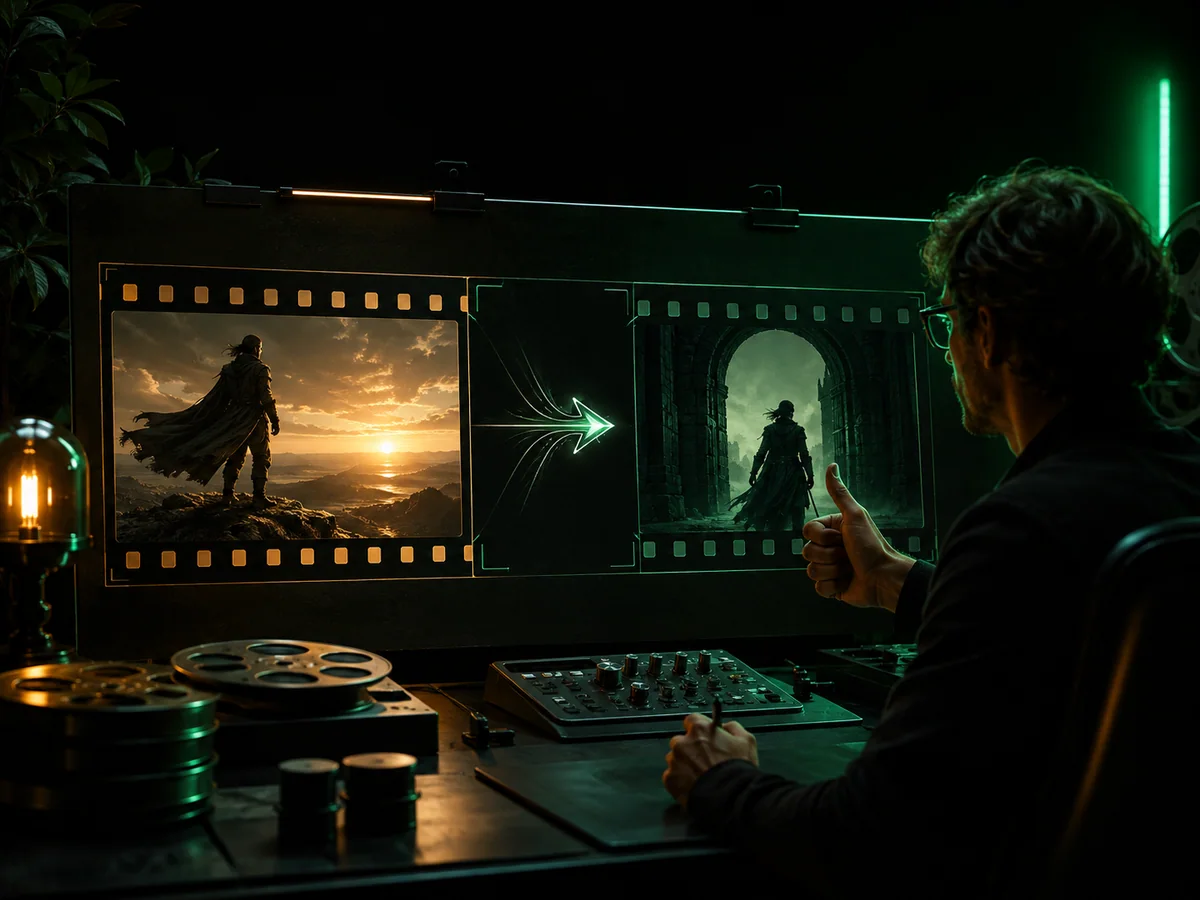
Yes; use an authorized source with clear subject placement and eyelines, then describe the next action rather than restating what the picture already shows. The image anchors where the scene starts, and the motion instruction is what Videoinu AI actually needs to generate.
When is a last frame useful?
A defined exit frame helps whenever the next edit needs a specific pose, direction, or visual state to cut into cleanly. Checking that final frame against the opening composition before submission keeps a Videoinu AI shot compatible with whatever sequence it eventually joins.
What is screen direction, and why does it matter here?
Screen direction tracks whether movement stays consistent, such as always left to right or always toward camera, across a sequence of shots. Flagging any unexplained reversal during review is what keeps a Videoinu AI shot from confusing a viewer once it sits next to its neighbors in an edit.
How should character action be blocked?
State the starting position, the path of movement, any interaction, and the final position as distinct pieces of the brief, and keep background movement subordinate to that action. This level of detail is what makes performance in a Videoinu AI clip read clearly rather than ambiguously.
Does this assemble a complete multi-scene film?
No; Videoinu AI generates one focused draft at a time, and sequencing, dialogue, music, and final editing all happen separately outside the generator. Treating each shot as a single building block, rather than a finished film, keeps expectations realistic.
What should be checked at the action peak?
Confirm the key gesture stays visible and physically coherent at the moment it matters most, and note any identity or prop change that slipped in around it. That single moment is usually what a viewer remembers from a Videoinu AI shot, so it deserves the closest inspection.
How are alternate performances compared?
Hold the beat and blocking constant while changing only one pace or gesture cue, then watch both versions at the same timestamps. This narrow comparison makes it possible to say which specific choice in a Videoinu AI attempt actually improved the performance.
Can the selected Videoinu AI scene be downloaded?
Yes; once a Videoinu AI generation completes, use the available result control to save it, and attach the beat sheet and continuity notes alongside the file. That attached context is what prepares the shot for assembly instead of leaving it as an isolated clip.
What rights and safety checks belong before release?
Verify source permission, any depicted identity, sensitive context, and audience suitability, and keep the final approval decision with a human reviewer rather than an automated check. That review step matters for any Videoinu AI shot headed toward a wider audience.